
5 steps to get a city-wide H2S overview
Hydrogen sulfide odors and corrosion are a challenge across the sewer network. But how do you figure out which areas to focus mitigation activities on, and which to ignore?
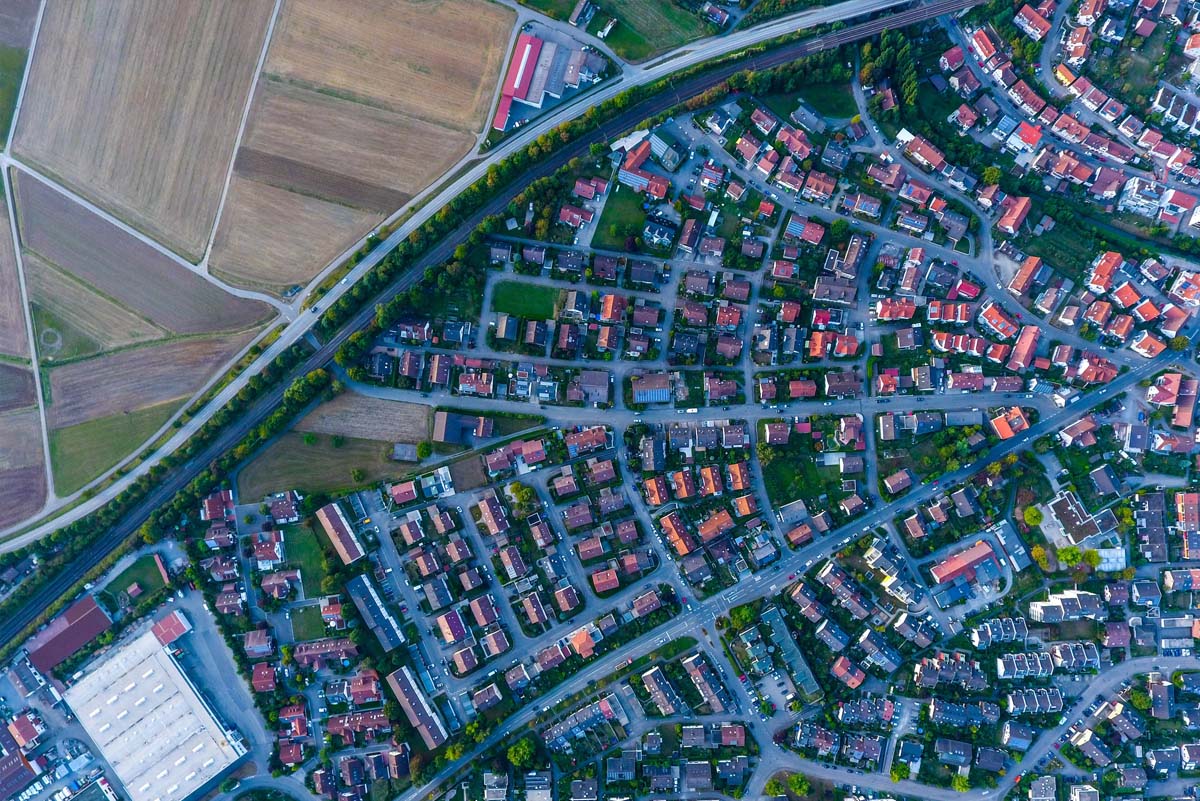
In this insight story, we provide a 5-step framework for how you can get a municipality-wide H2S overview via a sulfide mapping campaign. This mapping campaign provides a solid foundation that can be applied for selecting and prioritizing future sulfide mitigation activities on an informed basis.
Step 1: Plan the mapping campaign
 Mapping a municipality-wide sewer network does not have to be an overwhelming project. There are different approaches to the project, depending on the allocated resources – from short-term sensor mapping with just a few sensors to permanent monitoring campaigns using many sensors.
Short-term mapping campaigns
Using just a few sensors, it is possible to map an entire municipality-wide sewer network via short-term mapping campaigns.
The benefit of this approach is that it is an easy way to get started with just a few sensors, but the tradeoff is that the mapping campaign may take a long time to perform depending on the number of measurement sites (as defined at the end of step 3).
Permanent monitoring campaign
Another approach would be to use many sensors deployed across the network at the same time. This way, you quickly achieve a dynamic overview of the entire sewer network – although the entry barrier is higher as significantly more sensors are needed to get started.
The two approaches aren’t necessarily opposites. The short-term mapping could be used as a stepping-stone in the process of identifying which hotspots to select for permanent sulfide monitoring.
Step 2: Identify hotspots
 A municipality-wide sewer network consists of thousands of kilometers of pipes and many wells, basins, and pumping stations – and it is not realistic to measure H2S at all these locations. Thus, the next step in the mapping process consists of identifying all relevant H2S hotspots in the network.
H2S hotspots are the locations that are most likely to feature H2S-induced problems. These hotspots are commonly found:
- At the end of pressure pipes (force mains)
- In wells and basins
- In areas with sttheagnant water, low flow rates or other seasonal effects – such as clusters of vacation homes
- In areas with industrial discharge or other types of irregular/non-residental discharge
Step 3: Prioritize the hotspots
 With the hotspots mapped out, the next step is to set up a system for narrowing down the list by prioritizing which areas to perform measurements in the mapping campaign. There are numerous ways to do so, depending on the available data and the resources allocated for the mapping project. It is possible to either rank or categorize the hotspots, and relevant prioritization data could include:
- Retention time data/flow data
- Odor complaints
- Material type (concrete pipes)
- Material age
- The presence of critical infrastructure (highways, railroads, city centers etc.)
Step 4: Collect data
 With the hotspots selected and prioritized, it is now time to collect data. The data can be obtained via continuous liquid- or gas-phase measurements performed at the selected hotspots.
Liquid-phase measurements provide more reliable insights, as these data are unaffected by the local flow and ventilation conditions at the measurement site. You can read more about the benefit of measuring H2S in the liquid-phase in this insight story – The advantages of liquid-phase measurements.
If you have opted for a short-term measurement campaign in step 1, we recommend you measure for a least a week at every location to capture the effect of diurnal variations and to note potentially biasing factors such as heavy precipitation or significant changes in temperature for each affected measurement site.
Step 5: Analyze the data
 When you have gathered data from all the selected measurement sites, it is time to analyze and evaluate the data across the network. Doing so gives you a solid understanding of where potential hydrogen sulfide problems originale, and which areas to prioritize for future H2S mitigation strategies.
There are numerous ways to compare data, and we recommend you use multiple approaches to get the most reliable insights into both the average H2S concentrations and the frequency of H2S peak loads. Relevant data include:
- Average H2S load
- Peak H2S loads
- Number of incidents above a specified H2S threshold (etc. 0.5 or 1.0 mg/L)
- Percentage of time above a specified H2S threshold (etc. 0.5 or 1.0 mg/L)
As for data visualization, one approach could be to color code a list or map of the utility on the most relevant data.
Would you like to know more?
In this guide, we have provided a simple 5-step framework for how you can get started mapping hydrogen sulfide in a municipality-wide sewer network, and shared ideas on how to get started with the mapping project with just a few sensors.
Would you like to know more about how you can achieve a city-wide H2S overview?
We have made a webinar specifically about this topic. Sign up for the recorded webinars by filling out the form on this page, and view webinar number #4.